Introduction to Industry 4 and Industrial IoT Week 2 Nptel Assignment Answers
Are you looking for the NPTEL Introduction to Industry 4 and Industrial IoT Week 2 Assignment Answers 2025 (Jan-Apr)? You’ve come to the right place! Our comprehensive solutions will help you grasp the key concepts of Industry 4.0, including smart manufacturing, cyber-physical systems, and the role of IoT in industrial automation.
Table of Contents
Introduction to Industry 4 and Industrial IoT Week 2 Assignment Answers (July-Dec 2025)
Question 1. Which technological innovation drove the First Industrial Revolution?
a) Electricity and the assembly line
b) Invention of steam engine and construction of railways
c) Semiconductor fabrication techniques
d) Artificial Intelligence and Cyber-Physical Systems
Question 2. Which of the following sectors is considered as the conventional application area for robots?
a) Automotive industry
b) Precision agriculture
c) Nursing
d) Space exploration
Question 3. Fill in the blanks. A depression, compared to a recession, is characterized by ________________________.
a) Increased investment in manufacturing
b) Shorter duration of economic hardship
c) Lower unemployment rates
d) Higher levels of economic damage and longer duration
Question 4. In a manufacturing industry, which system is described as the “main nervous system”?
a) Supply-Chain Management (SCM)
b) Information and Communication Technology (ICT)
c) Energy-price monitoring
d) Human-resources planning
Question 5. Fill in the blanks. Emerging markets are expected to be found primarily in .
a) Developed countries
b) Developing countries
c) Polar regions
d) Nations with zero population growth
Question 6. Which of the following is a key feature of Lean production approach?
a) It emphasizes automation over manual labor
b) It focuses solely on financial outcomes
c) It considers the customer’s perspective
d) It aims to increase inventory levels
Question 7. Alongside Jidoka, Lean production is founded on which second pillar?
a) Kaizen
b) Just-in-Time
c) Kanban
d) Total Productive Maintenance
Question 8. What is the first step in the “5 steps of walking a value stream”?
a) Build a leadership team
b) Walk it – discuss value and list ideas
c) Focus on a single value stream
d) Schedule follow-up
Question 9. What is included among the fundamental building blocks of a smart business model?
a) Marketing campaigns
b) Customer values and key processes
c) Warehouse locations
d) Stock exchange metrics
Question 10. Which of the following represents the key attributes of a smart business model?
a) Value proposition
b) Revenue streams
c) Technologies
d) All of these
Question 11. Fill in the blanks. Big Data analytics in smart factories can help with_________________.
a) Generating knowledge
b) Reducing data storage
c) Eliminating sensors
d) Increasing manual paperwork
Question 12. Why are smart factories increasingly necessary in today’s industry?
a) They reduce the number of products needed
b) They support rigid, static manufacturing systems
c) They help achieve high production in less time with reduced risks of failure
d) They operate only in low-demand markets
Question 13. State True or False. Smart Grid is considered as a supporting technology for Smart Factories.
a) True
b) False
Question 14. Timely delivery and reliability are highlighted within sustainability under which supply-related concept?
a) Supply-Chain Management loop
b) Single-sourcing
c) Random demand generation
d) Personal mail delivery
Question 15. State True or False. Industry 4.0 is commonly referred to as the fourth industrial revolution pertaining to digitization in the manufacturing industry.
a) True
b) False
Nptel Introduction to Industry 4 and Industrial IoT Week 2 Assignment Answers (Jan-Apr 2025)
Course Link: Click Here
1) In the context of Industry 4.0, what is the full form of CPS?
A) Controlled Power System
B) Customer Provisioning Service
C) Cloud Processing Service
D) Cyber Physical Systems
2) State True or False: Business, providing information goods, has virtually zero transportation and replication cost.
A) True
B) False
3) Which of the following technologies is used by research scientists to selectively modify the DNA of living organisms?
A) 3D Printing
B) Nanomedicine
C) Liquid Biopsy
D) Genetic Engineering
4) Which of the following statements is true about addressing an economic crisis or recession?
A) Observing an increase in prices of major commodities is a key indicator.
B) Increasing productivity and reducing costs can help recover from a recession.
C) The main economy of a manufacturing location should always be based on only one resource to avoid crisis.
D) Recovery from a depression is faster than recovery from a recession when the same solution is applied.
5) What does ERP stand for in the context of ICT?
A) Enterprise Resource Planning
B) Electronic Resource Platform
C) Enhanced Reporting Protocol
D) Economic Resource Planning
6) How can enterprises improve sustainability with respect to energy consumption?
A) Increasing usage of non-renewable energy sources
B) Reducing energy consumption from non-renewable sources and increasing use of renewable energy
C) Focusing solely on reducing renewable energy costs
D) Ignoring energy price fluctuations
7) What is the primary goal of “Just-In-Time” in a Lean Production System?
A) Ensuring each process produces what is needed by the next process in a continuous flow
B) Producing in advance to meet potential future demand
C) Reducing production costs by purchasing cheap materials
D) Increasing inventory to minimize disruptions
8) What is a ‘value stream’ in a Lean Production System?
A) A set of tools for production
B) All the actions required for a product from order to delivery
C) A method of employee training
D) A type of waste reduction
9) Which of the following is an objective of Lean Production in Industry 4.0?
A) Increasing waste in processes to improve flexibility
B) Focusing on non-value-added activities to reduce costs
C) Identifying waste in processes and eliminating it
D) Eliminating continuous improvement efforts
10) Which of the following technologies is a medium for achieving smart and connected systems?
A) Embedded Systems
B) Traditional Mechanical Systems
C) Manual Control Systems
D) Non-Interactive Devices
11) Which of the following are key attributes of a smart business model?
A) Manual processes, cost reduction, and labor dependency
B) Value proposition, revenue streams, and technologies
C) Traditional marketing, fixed costs, and limited innovation
D) Centralized control, non-digital strategies, and fixed processes
12) Which of the following is not a component of a Smart Factory?
A) Smart machines
B) Smart manufacturing processes
C) Information Technology
D) Physical ledgers
13) In the Automation Pyramid of a Smart Factory, which level is just above the Device Level?
A) Control Level
B) ERP Level
C) Manufacturing execution system level
D) None of these
14) Which of the following is not a prerequisite of the Industrial Internet of Things?
A) Security
B) Incompatibility
C) Interoperability
D) Scalability
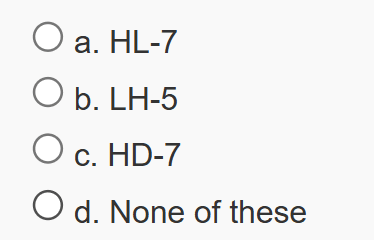
15) In which format is healthcare data transmitted to maintain data uniformity and interoperability?
Session: JUL – DEC 2024
Nptel Introduction to Industry 4 and Industrial IoT Week 2 Assignment Answers (JUL – DEC 2024)
Q1.Which of the following is NOT a characteristic of the Fourth Industrial Revolution?
a. Extensive use of ubiquitous and mobile internet
b. Use of artificial intelligence and machine learning
c. Invention of the steam engine
d. Development of Cyber Physical Systems (CPS)
Answer: c. Invention of the steam engine
Q2. What is a significant characteristic of new materials in the context of the Fourth Industrial Revolution?
a. High cost and scarcity
b. Lighter, stronger, recyclable, and adaptive
c. Easily available but very expensive
d. Non-recyclable and heavy
Answer: b. Lighter, stronger, recyclable, and adaptive
For answers or latest updates join our telegram channel: Click here to join
These are NPTEL Introduction to Industry 4 and Industrial IoT Week 2 Assignment Answers
Q3.Which of the following equipment can manifest physical objects based on digital specifications?
a. 3D Printer
b. Digital Microscope
c. DSLR Camera
d. Magnetic Separator
Answer: a. 3D Printer
Q4.Which of the following is not a characteristic of a sustainable industry?
a. Energy efficiency
b. Reliance on government subsidy
c. Conservation of resource
d. Low-waste production
Answer: b. Reliance on government subsidy
For answers or latest updates join our telegram channel: Click here to join
These are NPTEL Introduction to Industry 4 and Industrial IoT Week 2 Assignment Answers
Q5 .What is considered the main nervous system of any manufacturing industry?
a. Human Resources
b. Information and Communication Technology (ICT)
c. Supply Chain Management (SCM)
d. Marketing
Answer: b. Information and Communication Technology (ICT)
Q6.What is the impact of increasing renewable energy consumption on sustainability?
a. Increases sustainability
b. Increases waste product
c. Unpredictable consumption
d. Introduces delay
Answer: a. Increases sustainability
For answers or latest updates join our telegram channel: Click here to join
These are NPTEL Introduction to Industry 4 and Industrial IoT Week 2 Assignment Answers
Q7 .What is the concept of JIDOKA in Lean Production System?
a. Producing just what is needed
b. Stopping production when there is a problem
c. Reducing inventory
d. Increasing production speed
Answer: b. Stopping production when there is a problem
Q8.What is a ‘value stream’ in Lean Production System?
a. A set of tools for production
b. All the actions required for a product from order to delivery
c. A method of employee training
d. A type of waste reduction
Answer: b. All the actions required for a product from order to delivery
For answers or latest updates join our telegram channel: Click here to join
These are NPTEL Introduction to Industry 4 and Industrial IoT Week 2 Assignment Answers
Q9.What is a ‘value stream’ in Lean Production System?
a. A set of tools for production
b. All the actions required for a product from order to delivery
c. A method of employee training
d. A type of waste reduction
Answer: a. A set of tools for production
Q10.Which of the following is a benefit of smart and connected products?
a. Increased manual labor
b. Improved recall process of product
c. Higher production costs
d. Decreased automation
Answer: b. Improved recall process of product
For answers or latest updates join our telegram channel: Click here to join
These are NPTEL Introduction to Industry 4 and Industrial IoT Week 2 Assignment Answers
Q11.Which resource is associated with the ‘Optimization’ categorization of Smart and connected products?
a. Optimization algorithms
b. Manual controls
c. Marketing data
d. Financial reports
Answer: a. Optimization algorithms
Q12.Which of the following technologies can provide safety in radio active zones within a smart factory?
a. Cybersecurity
b. Augmented Reality
c. Additive Manufacturing
d. Smart Grid
Answer:b. Augmented Reality
For answers or latest updates join our telegram channel: Click here to join
These are NPTEL Introduction to Industry 4 and Industrial IoT Week 2 Assignment Answers
Q13.What are the characteristics of smart factories?
a. Connection, Optimization, Transparent, Proactivity, Agility
b. Manual operation, High cost, Slow processing
c. Limited connectivity, High energy consumption
d. Inefficient resource usage
Answer: a. Connection, Optimization, Transparent, Proactivity, Agility
Q14 .State True or False. The amalgamation of CPS and the evolution of Internet-based technologies led to the development of the Industrial Internet.
a. True
b. False
Answer: a. True
For answers or latest updates join our telegram channel: Click here to join
These are NPTEL Introduction to Industry 4 and Industrial IoT Week 2 Assignment Answers
Q15.State True or False. The real-time monitoring of the supply chain reduces inventory and capital requirements.
a. True
b. False
Answer: a. True
For answers or latest updates join our telegram channel: Click here to join
These are NPTEL Introduction to Industry 4 and Industrial IoT Week 2 Assignment Answers
All weeks of Introduction To Industry 4.0 And Industrial Internet Of Things: Click Here
For answers to additional Nptel courses, please refer to this link: NPTEL Assignment Answers