Python for Data Science NPTEL Week 2 Assignment Answers 2026
Are you looking for the Python for Data Science NPTEL Week 2 Assignment Answers 2026? You’ve come to the right place! This guide offers detailed solutions to the Week 2 assignment questions, helping you solidify your understanding of Python programming and its applications in data science.
Table of Contents
Python for Data Science NPTEL Week 1 Assignment Answers (Jan-Apr 2026)
Que.1
Which of the following object does not support indexing?
a) tuple
b) list
c) dictionary
d) set
Que.2
How can you concatenate the strings “data” and “science” with a hyphen (-) between them?
a) "data".join("science")
b) "-".join(["data", "science"])
c) "data" + "-" + "science"
d) None of the above
Que.3
What will be the output of the following code snippet?
a)
[[ 5 12]
 [21 32]]
b)
[[19 22]
 [43 50]]
c)
[[3 8]
 [35 56]]
d)
[[ 5 21]
 [12 32]]
Que.4
What will be the output of the following code snippet?
a) [1 10 3 4 5 6 7 8 9 10]
b) [10 1 2 3 4 5 6 7 8 9]
c) [0 10 2 3 4 5 6 7 8 9]
d) [10 2 3 4 5 6 7 8 9]
Que.5
What is the output of the following code?
a) [2, 3, 4, 5]
b) [0, 1, 2, 3]
c) [1, 2, 3, 4]
d) Will throw an error: Set objects are not iterable
Que.6
What will be the output of the following code snippet?
a) {27.5}
b) {1, 'four ', 3.0, 3, 5, 'two ', 10, 27.5}
c) {1, 'four ', 3.0, 5, 'two ', 10, 27.5}
d) {1, 'four ', 3.0, 5, 'two ', 3}
Que.7
Let t1 = (1, 2, "tuple", 4) and t2 = (5, 6, 7). Which of the following will not give any error after execution?
a) t1.append(5)
b) x = t2[t1[1]]
c) t3 = t1 + t2
d) t3 = (t1, t2)
e) t3 = (list(t1), list(t2))
Que.8
Let d = {1 : "Python", 2 : [1, 2, 3]}. Which among the following will not give an error after execution?
a) d[2].append(4)
b) x = d[0]
c) d["one"] = 1
d) d.update({'one' : 2})
Que.9
Which of the following data type is immutable?
a) list
b) set
c) tuple
d) dictionary
Que.10student = {'name': 'Jane', 'age': 25, 'courses': ['Math', 'Statistics']}
Which among the following will return{'name': 'Jane', 'age': 26, 'courses': ['Math', 'Statistics'], 'phone': '123-456'}
a) student.update({'age' : 26})
b) student.update({'age' : 26, 'phone': '123-456'})
c) student['phone'] = '123-456'
d) student.update({'age' : 26})
e) None of the above
Que.11
What is the output of the following code?
a) ['M', 'A', 'H', 'E', 'S', 'H']
b) ['m', 'a', 'h', 'e', 's', 'h']
c) ['M', 'a', 'h', 'e', 's', 'h']
d) ['m', 'A', 'H', 'E', 'S', 'H']
Que.12
What will be the output of the following code snippet?
a)
[[1 2 3 4 5]
 [3 4 5 6 7]
 [5 6 7 8 9]]
b)
[[1 2 3 4]
 [3 4 5 6]
 [5 6 7 8]]
c)
[[2 3 4]
 [4 5 6]
 [6 7 8]]
d) None of the above
(July-Dec 2025)
Question 1. Which of the following object does not support indexing?
a) tuple
b) list
c) dictionary
d) set
Question 2. How can you concatenate the strings “data” and “science” with a hyphen(-) between them?
a) “data”.join(“science”)
b) “-”.join([“data”, “science”])
c) “data” + “-” + “science”
d) None of the above.
Question 3. What will be the output of the following code snippet?
a) [[ 5 12], [21 32]]
b) [[19 22], [43 50]]
c) [[3 8], [35 56]]
d) [[ 5 21], [12 32]]
Question 4. What will be the output of the following code snippet?
a) [ 1 10 3 4 5 6 7 8 9 10]
b) [ 10 1 2 3 4 5 6 7 8 9]
c) [ 0 10 2 3 4 5 6 7 8 9]
d) [ 10 2 3 4 5 6 7 8 9 ]
Question 5. What is the output of the following code?
a) [2, 3, 4, 5]
b) [0, 1, 2, 3]
c) [1, 2, 3, 4]
d) Will throw an error: Set objects are not iterable.
Question 6. What will be the output of the following code snippet?
a) {27.5}
b) {1, ‘four ‘, 3.0, 3, 5, ‘two ‘, 10, 27.5}
c) {1, ‘four ‘, 3.0, 5, ‘two ‘, 10, 27.5}
d) {1, ‘four ‘, 3.0, 5, ‘two ‘, 3}
Question 7. Let t1 = (1, 2, “tuple”, 4) and t2 = (5, 6, 7). Which of the following will not give any error after the execution?
a) t1.append(5)
b) x = t2[t1[1]]
c) t3 = t1 + t2
d) t3 = (t1, t2)
e) t3 = (list(t1), list(t2))
Question 8. Let d = {1 : “Pyhton”, 2 : [1, 2, 3]}. Which among the following will not give the error after the execution?
a) d[2].append(4)
b) x = d[0]
c) d[“one”] = 1
d) d.update({‘one’ : 2})
Question 9. Which of the following data type is immutable?
a) list
b) set
c) tuple
d) dictionary
Question 10. student = {‘name’: ‘Jane’, ‘age’: 25, ‘courses’: [‘Math’, ‘Statistics’]}
Which among the following will return
{‘name’: ‘Jane’, ‘age’: 26, ‘courses’: [‘Math’, ‘Statistics’], ‘phone’: ‘123-456’}?
a) student.update({‘age’ : 26})
b) student.update({‘age’ : 26, ‘phone’: ‘123-456’})
c) student[‘phone’] = ‘123-456’
d) student.update({‘age’ : 26})
e) None of the above
Question 11. What is the output of the following code?
a) [‘M’, ‘A’, ‘H’, ‘E’, ‘S’, ‘H’]
b) [‘m’, ‘a’, ‘h’, ‘e’, ‘s’, ‘h’]
c) [‘M’, ‘a’, ‘h’, ‘e’, ‘s’, ‘h’]
d) [‘m’, ‘A’, ‘H’, ‘E’, ‘S’, ‘H’]
Question 12. What will be the output of the following code snippet?
a) [[1 2 3 4 5], [3 4 5 6 7], [5 6 7 8 9]]
b) [[1 2 3 4], [3 4 5 6], [5 6 7 8]]
c) [[2 3 4], [4 5 6], [6 7 8]]
d) None of the above
(Jan-Apr 2025)
Course Link: Click Here
1) Which of the following objects does not support indexing?
Options:
[a] tuple
[b] list
[c] dictionary
[d] set
2) How can you concatenate the strings “data” and “science” with a hyphen (-) between them?
Options:
[a] "data".join("science")
[b] ".join(["data", "science"])
[c] "data" + "science"
[d] None of the above
3) What will be the output of the following code snippet?
import numpy as np
c = np.dot(a, b)
print(c)
Options:
[a] [5, 12]
[b] [21, 32]
[c] [[19, 22], [43, 50]]
[d] [35, 56]
4) What will be the output of the following code snippet?
import numpy as np
a = np.arange(10)
b = 10
print(a)
Options:
[a] [1, 10, 9]
[b] [10, 8, 9]
[c] [0, 10, 9]
[d] [10, 2, 3, 4, 5, 6, 7, 8, 9]
5) What is the output of the following code?
for i in range(len(s)):
    print(i)
Options:
[a] Will throw an error: Set objects are not iterable.
[b] Will print the indices of the set.
[c] Will print the elements of the set.
[d] Will run indefinitely.
6) What will be the output of the following code snippet?
A = {1, 2, 3}
B = {3, 4, 5}
print(A | B)
Options:
[a] {27.5}
[b] {1, 2, 3, 4, 5}
[c] {1, 2, 3}
[d] {4, 5}
7) Given the tuples tl = (1, 2, "tuple", 4) and t2 = (5, 6, 7), which of the following will not give any error after execution?
Options:
[a] tl.append(5)
[b] list(t2)
[c] tl + t2
[d] (tl, t2)
8) Given the dictionary d = {1: "Python", 2: [1, 2]}, which of the following will not give an error after execution?
Options:
[a] d[2].append(4)
[b] d[1] = 1
[c] d["one"] = 1
[d] None of the above
9) Which of the following data types is immutable?
Options:
[a] list
[b] set
[c] tuple
[d] dictionary
10) Given the dictionary student = {"name": "Jane", "age": 26, "courses": ["Math", "Science"]}, which of the following will return the phone number?
Options:
[a] student['phone']
[b] student['phone'] = '123-456'
[c] student['phone']
[d] None of the above
11) What is the output of the following code?
name = "Mahesh"
for i in name:
    t.append(i.capitalize())
print(t)
Options:
[a] ["M", "A", "H", "E", "S", "H"]
[b] ["Mahesh"]
[c] ["Mahesh".capitalize()]
[d] None of the above
12) What will be the output of the following code snippet?
import numpy as np
a = np.array([range(i, i+4) for i in range(3)])
print(a)
Options:
[a] [[0, 1, 2, 3], [1, 2, 3, 4], [2, 3, 4, 5]]
[b] [[3, 4, 5, 6], [5, 6, 7, 8]]
[c] [[0, 1, 2, 3], [1, 2, 3, 4], [2, 3, 4, 5]]
[d] None of the above
(JULY-DEC 2024)
Q1. Which of the following object does not support indexing?
tuple
list
dictionary
set
Answer: set
Q2. Given a NumPy array, arr = np.array([[[1, 2, 3], [4, 5, 6], [7, 8, 9]]]), what is the output of the command, print(arr[0][1])?
[[1 2 3]
[4 5 6]
[7 8 9]]
[1 2 3]
[4 5 6]
[7 8 9]
Answer: [4 5 6]
For answers or latest updates join our telegram channel: Click here to join
These are Python for Data Science Nptel Week 2 Assignment Answers
Q3. What is the output of the following code?
[2, 3, 4, 5]
[0 1 2 3]
[1, 2, 3, 4]
Will throw an error: Set objects are not iterable.
Answer:[1, 2, 3, 4]
Q4. What is the output of the following code?
import numpy as np
arr = np.array (np.arange(0, 15))
print(arr.reshape (3,5))
Answer: c)
For answers or latest updates join our telegram channel: Click here to join
These are Python for Data Science Nptel Week 2 Assignment Answers
Q5. Which of the following code gives output My friend’s house is in Chennai?
Answer: a),d)
Q6. Let t1 = (1, 2, “tuple”, 4) and t2 = (5, 6, 7). Which of the following will not give any error after the execution?
a) t1.append(5)
b) x=t2[t1[1]]
c) t3=t1+t2
d) t3=(t1,t2)
e) t3=(list(t1),list(t2))
Answer: b),c),d),e)
For answers or latest updates join our telegram channel: Click here to join
These are Python for Data Science Nptel Week 2 Assignment Answers
Q7. Let d= {1 : “Pyhton”, 2 : [1, 2, 3]}. Which among the following will not give the error after the execution?
a) d[2].append(4)
b) x=d[0]
c) d[“one”]=1
d) d.update(‘one′:2)
Answer: a),c),d)
Q8. Which of the following data type is immutable?
list
set
tuple
dictionary
Answer: tuple
For answers or latest updates join our telegram channel: Click here to join
These are Python for Data Science Nptel Week 2 Assignment Answers
Q9. student = {‘name’: ‘Jane’, ‘age’: 25, ‘courses’: [‘Math’, ‘Statistics’]}
Which among the following will return
{‘name’: ‘Jane’, ‘age’: 26, ‘courses’: [‘Math’, ‘Statistics’], ‘phone’: ‘123-456’}
a) student.update({‘age’ : 26})
b) student.update({‘age’ : 26, ‘phone’: ‘123-456’})
c) student[‘phone’] = ‘123-456’
d) student.update({‘age’ : 26})
e) None of the above
Answer: b),c)
Q10.What is the output of the following code?
[‘M’, ‘A’, ‘H’, ‘E’, ‘S’, ‘H’]
[‘m’, ‘a’, ‘h’, ‘e’, ‘s’, ‘h’]
[‘M’, ‘a’, ‘h’, ‘e’, ‘s’, ‘h’]
[‘m’, ‘A’, ‘H’, ‘E’, ‘S’, ‘H’]
Answer: [‘M’, ‘A’, ‘H’, ‘E’, ‘S’, ‘H’]
For answers or latest updates join our telegram channel: Click here to join
These are Python for Data Science Nptel Week 2 Assignment Answers
Python for Data Science NPTEL All weeks: Click Here
More Nptel Courses: https://progiez.com/nptel-assignment-answers
(JAN-APR 2024)
Course name: Python For Data Science
Course Link: Click Here
For answers or latest updates join our telegram channel: Click here to join
These are NPTEL Python for Data Science Assignment 2 Answers
Q1. Which of the following object does not support indexing?
tuple
list
dictionary
set
Answer: set
Q2. Given a NumPy array, arr = np.array([[[1, 2, 3], [4, 5, 6], [7, 8, 9]]]), what is the output of the command, print(arr[0][1])?
a. [[1 2 3]
[4 5 6]
[7 8 9]
b. [1 2 3]
c. [4 5 6]
d. [7 8 9]
Answer: c. [4 5 6]
Q3. What is the output of the following code?
[2, 3, 4, 5]
[0 1 2 3]
[1, 2, 3, 4]
Will throw an error: Set objects are not iterable.
Answer: [1, 2, 3, 4]
For answers or latest updates join our telegram channel: Click here to join
These are NPTEL Python for Data Science Assignment 2 Answers
Q4. What is the output of the following code?
a)
b)
c)
d)
Answer: c) [[0 1 2 3 4 [ 5 6 7 8 9] [10 11 12 13 14]]
Q5. Which of the following code gives output My friend’s house is in Chennai?
a)
b)
c)
d)
Answer: a), d)
a) place = ‘Chennai’
print (“My friend’s house is in {}”. format (place) )
d) print (“My friend’s house is in {}”. format (“Chennai”) )
Q6. Let t1=(1,2,“tuple”,4) and t2=(5,6,7). Which of the following will not give any error after the execution?
t1.append(5)
x=t2[t1[1]]
t3=t1+t2
t3=(t1,t2)
t3=(list(t1), list(t2))
Answer: b, c, d, e
For answers or latest updates join our telegram channel: Click here to join
These are NPTEL Python for Data Science Assignment 2 Answers
Q7. Let d={1:“Pyhton”,2:[1,2,3]}. Which among the following will not give the error after the execution?
d[2].append(4)
x=d[0]
d[“one”]=1
d.update({‘one’ : 2})
Answer: a, c, d
Q8. Which of the following data type is immutable?
list
set
tuple
dictionary
Answer: tuple
Q9. student = {‘name’: ‘Jane’, ‘age’: 25, ‘courses’: [‘Math’, ‘Statistics’]}
Which among the following will return
{‘name’: ‘Jane’, ‘age’: 26, ‘courses’: [‘Math’, ‘Statistics’], ‘phone’: ‘123-456’}?
a. student.update({‘age’ : 26})
b. student.update({‘age’ : 26, ‘phone’: ‘123-456’})
c. student[‘phone’] = ‘123-456’
student.update({‘age’ : 26})
d. None of the above
Answer: a, b, c
Q10. What is the output of the following code?
[‘M’, ‘A’, ‘H’, ‘E’, ‘S’, ‘H’]
[‘m’, ‘a’, ‘h’, ‘e’, ‘s’, ‘h’]
[‘M’, ‘a’, ‘h’, ‘e’, ‘s’, ‘h’]
[‘m’, ‘A’, ‘H’, ‘E’, ‘S’, ‘H’]
Answer: [‘M’, ‘A’, ‘H’, ‘E’, ‘S’, ‘H’]
For answers or latest updates join our telegram channel: Click here to join
These are NPTEL Python for Data Science Assignment 2 Answers
More Weeks of Python for Data Science: Click here
More Nptel Courses: Click here
(JAN-APR 2023)
Course Name: Python for Data Science
Course Link: Click Here
These are NPTEL Python for Data Science Assignment 2 Answers
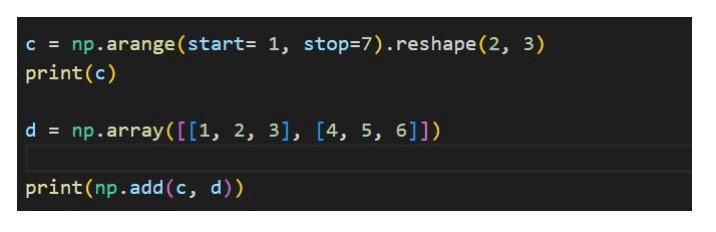
Q1. What will be the output of the following:
a. [[2 6 10]
[4 8 12]]
b. [[2 4 6]
[8 10 12]]
c. [[2 4]
[6 8]
[10 12]]
d. [[2 8]
[4 10]
[6 12]]
Answer: b. [[2 4 6]
[8 10 12]]
Q2. Let t1 = (1, 2, “tuple”, 4) and t2 = (5, 6, 7). Which of the following will not give any error after the execution?
a. t1.append(5)
b. x = t2[t1[1]]
c. t3 = t1 + t2
d. t3 = (t1, t2)
e. t3 = (list(t1), list(t2))
Answer: a, b, c, d, e
These are NPTEL Python for Data Science Assignment 2 Answers
Q3. Let d1 = {1 : “Pyhton”, 2 : [1, 2, 3]}. Which among the following will not give the error after the execution?
a. d1[2].append(4)
b. x = d1[0]
c. d1[“one”] = 1
d. d1.update({‘one’ : 2})
Answer: a, c, d
Q4. S1 = {1, 2, 3}
S2 = {5, 6, 3}
S1.add(4)
S2.add(“4”)
What will be the output of S1 − S2?
a. {1, 2, 3}
b. {1, 2, 3, 4}
c. {1, 2, “4”}
d. {1, 2, 4}
Answer: d. {1, 2, 4}
These are NPTEL Python for Data Science Assignment 2 Answers
Q5. S1 = “Hello” and S2 = “World”. Which of the following will not return “Hello world”?
a. S1 + “ ” + S2
b. S1[0 :] + “ ” + S2[0 :]
c. “{} {}”.format(S1, S2)
d. S1[: −1] + “ ” + S2[: −1]
Answer: d. S1[: −1] + “ ” + S2[: −1]
Q6. Given a NumPy array, arr = np.array([[1, 9, 10], [3, 7, 6], [12, 8, 0]]), find the correct command from the following options to get an output array as [16 24 16]?
a. arr[1: 2]
b. np.sum(arr, axis = 0)
c. np.sum(arr, axis = 1)
d. np.sum([[1, 9, 10], [3, 7, 6], [12, 8, 0]])
Answer: b. np.sum(arr, axis = 0)
These are NPTEL Python for Data Science Assignment 2 Answers
Q7. mat = np.matrix(“5, 9, 10; 2, 5, 4; 1, 9, 8; 2, 6, 8”)
mat1 = np.matrix(“1, 2, 3, 4”)
mat2 = np.insert(mat, 1, mat1, axis= 1)
print(mat2)
What will be the output of the above command?
a. [[5 2 1 2]
[1 2 3 4]
[9 5 9 6]]
[10 4 8 8]]
b. [[1 2 3 4]
[5 2 1 2]
[9 5 9 6]]
[10 4 8 8]]
c. [[5 1 9 10]
[2 2 5 4]
[1 3 9 8]]
[2 4 6 8]]
d. It will give an error.
Answer: d. It will give an error.
Q8. student = {‘name’: ‘Jane’, ‘age’: 25, ‘courses’: [‘Math’, ‘Statistics’]}
Which among the following will return
{‘name’: ‘Jane’, ‘age’: 26, ‘courses’: [‘Math’, ‘Statistics’], ‘phone’: ‘123-456’}
a. student.update({‘age’ : 26})
b. student.update({‘age’ : 26, ‘phone’: ‘123-456’})
c. student[‘phone’] = ‘123-456’
d. student.update({‘age’ : 26})
e. None of the above
Answer: b, c
These are NPTEL Python for Data Science Assignment 2 Answers
Q9. c = np.arange(start = 1, stop = 20, step = 3). What is c[5]?
a. 13
b. 16
c. 15
d. 12
Answer: b. 16
Q10. Which of the following data type is immutable?
a. list
b. set
c. tuple
d. dictionary
Answer: c. tuple
These are NPTEL Python for Data Science Assignment 2 Answers
More Weeks of Python for Data Science NPTEL: Click here
More NPTEL courses: https://progiez.com/nptel
(JULY-DEC 2022)
Q1. Which of the following function(s) can be used to resize a NumPy array in Python from the given options.
a. array.shape(reshape)
b. array.reshape(shape)
c. numpy.reshape(array, shape)
d. numpy.reshape(shape, array)
Answers: b, c
These are NPTEL Python for Data Science Assignment 2 Answers
2. Create the tuples given below:
tuple_1 = (1,5,6,7,8)
tuple_2 = (8,9,4)
Identify which of the following options does not work on the given tuples
a. sum(tuple_1)
b. len(tuple_2)
c. tuple_2 + tuple_1
d. tuple_1[3] = 45
Answers: d. tuple_1[3] = 45
3. Create a sequence of numbers from 15 to 25 and increment by 4. What is the index of the element 19?
a. 3
b. 2
c. 0
d. 1
Answers: d. 1
These are NPTEL Python for Data Science Assignment 2 Answers
4. Consider a variable job = “chemist”. Which of the following expression(s) will retrieve the last character from the string?
a. job[7]
b. job[len(job) – 1]
c. job[5:6]
d. job[- 1]
Answers: b, c
5. Given a list, ls = [1, 2, 3, 3, 2, 3, 1, 4, 5, 6, 5, 6, 3, 2, 1, 1, 1, 7, 8, 9, 7, 8, 9, 7, 8, 9, 7, 8, 9, 10, 10, 1, 2, 3, 9, 10], which of the following would be the most efficient method in determining the unique elements present in ls?
a. By converting ls into a NumPy array, and applying relevant methods
b. By converting ls into a set
c. By iterating through ls, and doing appropriate manipulations
d. None of the above
Answers: b. By converting ls into a set
These are NPTEL Python for Data Science Assignment 2 Answers
6. Which of the following data structure(s) can be used as a key while creating a dictionary?
a. list
b. str
c. set
d. None
Answers: b. str
7. Given a dictionary, states = {‘Tamil Nadu’: ‘TN’, ‘Karnataka’: ‘KA’, ‘Kerala’: ‘KL’, ‘Maharashtra’: ‘MH’}, which of the following command(s) is used to remove the key-value pair ‘Karnataka’: ‘KA’ from it?
a. del states[‘Karnataka’]
b. states.popitem(‘Karnataka’)
c. states.pop(‘Karnataka’)
d. del states[‘Karnataka’:’KA’]
Answers: c. states.pop(‘Karnataka’)
8. Which of the following is valid to declare a string literal Shin’ichi to a variable?
a. “Shin’ichi”
b. ‘Shin”ichi’‘
c. Shin’ichi’
d. None of the above
Answers: a. “Shin’ichi”
These are NPTEL Python for Data Science Assignment 2 Answers
9. Which of the following commands can be used to create a NumPy array?
a. np.array()
b. np.zeros()
c. np.empty()
d. All of the above
Answers: d. All of the above
10. Given a NumPy array, arr = np.array([[5,9,10], [7,2,6], [12,8,0]]), find the correct command from the following options to get an output array as [24 15 20]?
a. np.sum(arr)
b. np.sum(arr, axis = 0)
c. np.sum(arr, axis = 1)
d. None of the above
Answers: c. np.sum(arr, axis = 1)
These are NPTEL Python for Data Science Assignment 2 Answers